
MPFL Reconstruction
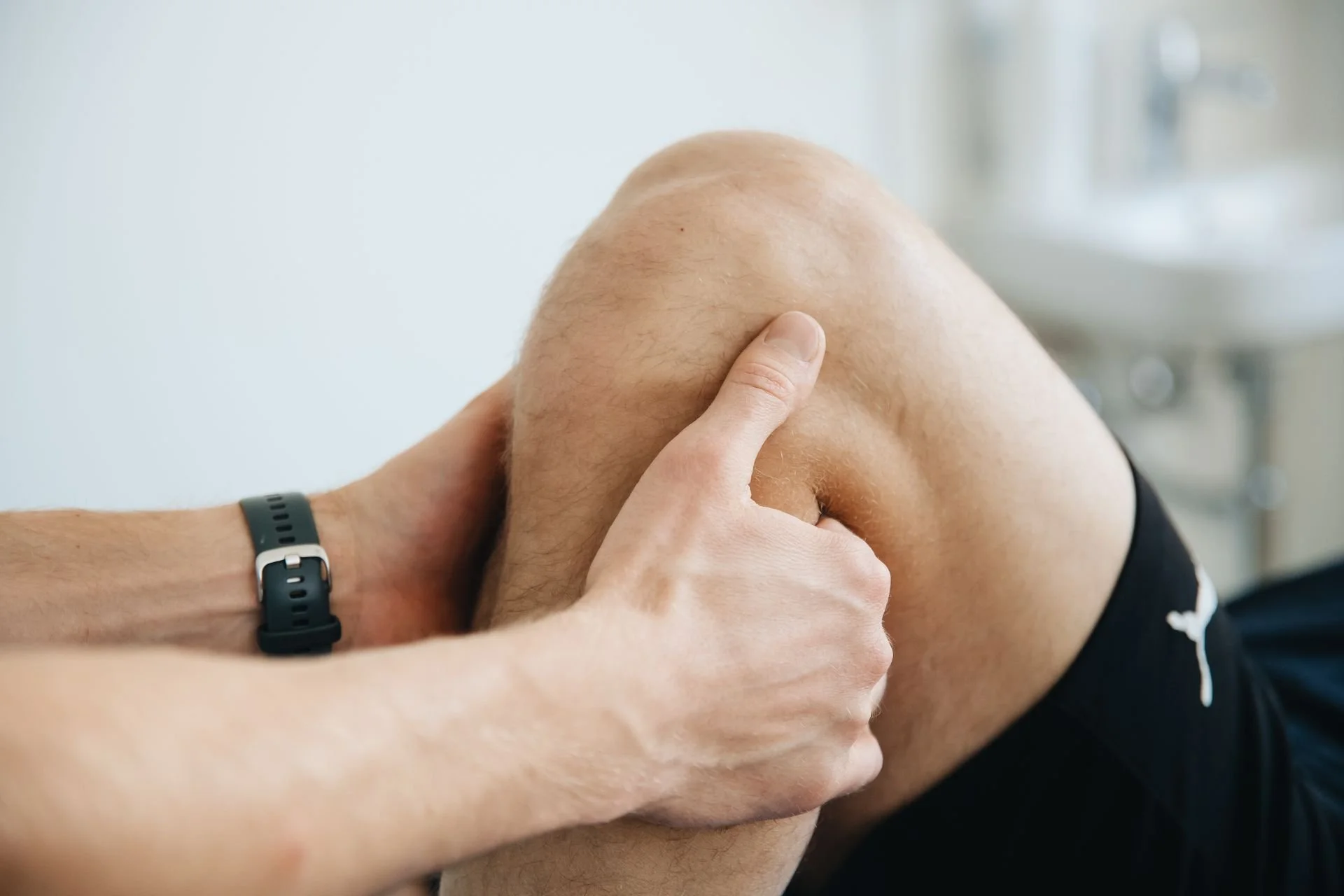
As your kneecap becomes less stable, simple things like climbing stairs or changing direction can feel risky. MPFL reconstruction rebuilds the ligament that holds your kneecap in its groove, so you can confidently move again.
Dr David Sime is an orthopaedic surgeon in Melbourne with subspecialty training in sports knee surgery. He operates at:
Epworth Richmond
St Vincent’s Private Hospital, Fitzroy
Holmesglen Private Hospital, Moorabbin
Knox Private Hospital, Wantirna
Beleura Private Hospital, Mornington
What Is the MPFL?
The medial patellofemoral ligament (MPFL) is a short band on the inner side of your knee. It works like a tether, stopping the kneecap from sliding outwards. When the kneecap dislocates, this ligament can stretch or tear. If it no longer holds the kneecap firmly in place, the kneecap may become unstable and dislocate again.
Medial patellofemoral ligament reconstruction replaces that weakened ligament with a tendon graft. Non-surgical care is the starting point for most patellar dislocation treatment, and surgery comes in when the knee stays unstable.
Who Needs MPFL Surgery?
After a First-Time Dislocation
Most people are treated without surgery after their first dislocation, meaning they may need a brace for a short time, followed by a physio program to rebuild strength.
Surgery may be considered earlier if a scan shows a loose piece of cartilage or bone inside the joint. It may also be discussed when the shape of your knee makes another dislocation likely.
After Recurrent Dislocations
If the kneecap has dislocated more than once, there’s a higher chance of it recurring. Each episode can also damage the cartilage even further, which is why MPFL surgery is usually recommended.
There are other structural factors to consider, like having a shallow groove or a high-riding kneecap, which can both affect how often it happens again. In these cases, Dr Sime may combine the ligament work with knee realignment surgery so both problems are addressed together.
Consult with Dr David Sime to review your symptoms, scans and history of dislocations, and discuss if MPFL surgery is appropriate or if other non-surgical treatments are available.
What Happens During MPFL Reconstruction Surgery
MPFL reconstruction surgery is performed under general anaesthetic and can take around an hour. Dr Sime often starts with a camera check inside the joint (similar to a knee arthroscopy surgery) to look at the cartilage and remove any loose fragments.
He then takes a small tendon graft, usually from the hamstring. The graft is fixed between the kneecap and the thigh bone through small incisions.
Most patients go home the same day or after one night in hospital. Dr Sime will provide personalised instructions on your recovery and expected downtime.
MPFL Reconstruction Recovery Milestones
Every knee heals at its own pace. As a general guide, MPFL reconstruction recovery could look like this.
Walking: Most people walk on the day of surgery with crutches and a brace. Crutches are usually needed for two to four weeks.
Driving: If your left knee was operated on and you drive an automatic, you may drive after about two weeks. For the right knee, it's usually closer to six weeks.
Work: Desk jobs often resume within one to two weeks. Physical jobs may need six to twelve weeks.
Running: Light jogging typically starts around three to four months.
Sport: Most people return to sport between six and nine months, once strength testing is passed.
These milestones are only a general guide. For advice tailored to your recovery, speak with your orthopaedic surgeon or healthcare professional.
MPFL vs ACL Injuries
MPFL and ACL injuries cause different problems.
The ACL sits deep inside the knee and controls twisting. The MPFL sits on the inner edge and keeps the kneecap on track. An ACL tear rarely heals on its own, and returning to sport after ACL reconstruction surgery can take up to 12 months.
Recovery from MPFL reconstruction surgery, on the other hand, is usually shorter, with sport often possible at six to nine months.
Call Dr Sime for injury assessment and recommendation on the most appropriate treatment or procedure for you.
Why Choose Dr David Sime
Dr Sime completed a sports knee surgery fellowship at the Fortius Clinic in London, the UK's largest sports medicine clinic, treating elite footballers and rugby players. Before London, he completed a knee fellowship at the Royal Infirmary of Edinburgh.
He has taught knee ligament reconstruction to surgeons as invited faculty in Bangkok. He is a Fellow of the Royal Australasian College of Surgeons and the Australian Orthopaedic Association. He also belongs to international knee societies including ESSKA and ISAKOS.
Dr Sime is an established knee specialist in Melbourne that GPs and physios refer to for complex ligament work.
Has your kneecap dislocated more than once, or are you unsure what a first dislocation means for you? Book a consultation today.
Frequently Asked Questions
-
MPFL surgery is a significant ligament operation, but it's done through small incisions. Most patients go home the same day or the next morning. More time and commitment are needed for rehab and recovery.
-
Most people walk on the day of their surgery with crutches. Walking unaided usually follows within two to four weeks. But this still depends on the complexity of the operation.
-
Everyday activities usually return within about six weeks of MPFL reconstruction surgery. A return to sport generally takes six to nine months.
-
An ACL tear usually means a longer road back to sport. MPFL injuries tend to recover faster but can lead to repeat dislocations and cartilage damage if untreated.

Dr David Sime
MBBS(Hons), MSc(Hons), FRACS, FAOrthA
Orthopaedic Hip & Knee Surgeon
Dr David Sime is a leading and internationally trained consultant Orthopaedic Surgeon practising in the central, South Eastern and Mornington Peninsula region of Melbourne, Australia.