
Partial Knee Replacement
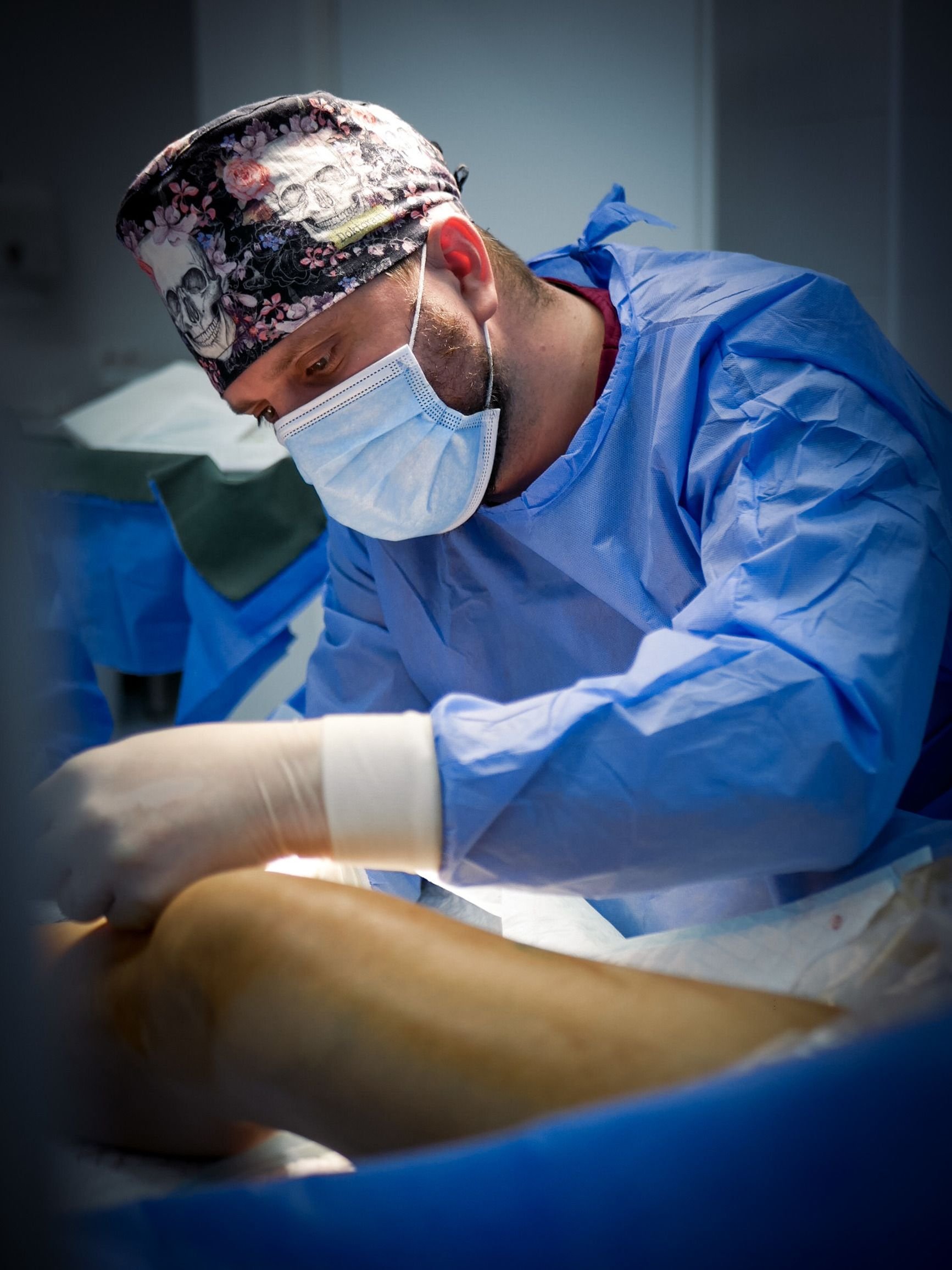
When arthritis wears away a side of your knee, replacing the whole joint isn't always necessary. A partial knee replacement resurfaces the damaged area and leaves the healthy parts intact.
For specialist partial knee replacement surgery in Melbourne, consult with Dr David Sime, an orthopaedic surgeon with fellowship training in complex knee replacement. He operates in:
Epworth Richmond
St Vincent’s Private Hospital, Fitzroy
Holmesglen Private Hospital, Moorabbin
Knox Private Hospital, Wantirna
Beleura Private Hospital, Mornington
What Is a Partial Knee Replacement?
Your knee has three compartments:
Medial compartment on the inner side
Lateral compartment on the outer side
Patellofemoral compartment at the front of the knee
A unicompartmental knee replacement replaces the worn surfaces in just one of these areas, most often the medial compartment. It is also sometimes called a half knee replacement. Metal components cover the end of the thigh bone and the top of the shin bone, with a plastic insert between them to help the joint move smoothly.
The Right Orthopaedic Care for Your Knee
Suitability comes from several pieces of evidence that all need to line up.
Dr Sime then examines your knee to check if ligaments are sound, like checking for a good range of movement.
Standing X-rays show where the cartilage has worn. An MRI or specialised X-ray views may be added to confirm that the other compartments and the kneecap joint are healthy. The final check happens during partial knee replacement surgery (if needed) when Dr Sime can see the joint directly.
If arthritis has spread to more than one compartment, you might require total knee replacement surgery. Some younger, active patients with a bowed leg and early wear may be better suited to knee realignment surgery.
Dr Sime will talk you through the pros and cons of partial vs full knee replacement based on what the assessment shows.
The Operation
Partial knee replacement surgery is done under a general or spinal anaesthetic. It uses a smaller incision than a total knee and leaves the cruciate ligaments in place, which is why many people say the knee feels more natural afterwards.
Dr Sime also performs robotic knee replacement, which can help with planning and implant positioning. To know which type of partial knee replacement surgery is best for your condition and symptoms, book a consultation with Dr Sime.
Cost and Funding
Partial knee replacement is listed on the Medicare Benefits Schedule as item 49517. As a private patient in a hospital, Medicare pays 75% of the schedule fee, and your health fund pays the rest.
The surgery may be covered under some private hospital insurance policies. Check your policy inclusions and waiting periods, as pre-existing conditions may be subject to a waiting period of up to 12 months.
An out-of-pocket gap applies when surgeon or anaesthetist fees sit above what Medicare and your fund pay. You'll typically receive a written estimate before surgery so you know the costs upfront. Surgery is also available through the public system, where waiting times can be lengthy.
Why Choose Dr David Sime
Dr Sime completed a fellowship at the Royal Infirmary of Edinburgh focused on complex primary and revision knee replacement. He followed this with a sports knee fellowship at London's Fortius Clinic. He is a Fellow of the Royal Australasian College of Surgeons and the Australian Orthopaedic Association.
Dr Sime is a trusted knee specialist Melbourne GPs refer to for joint replacement, and he gives you a clear view of your options before any decision is made.
Book a consultation to find out if a partial knee replacement suits you.
Frequently Asked Questions
-
No guideline sets a best age. Younger people can still be good candidates, but the plan should allow for a possible second operation later in life.
-
Most people return to walking, cycling, swimming and golf. High impact activities such as running and jumping are usually discouraged because impact adds wear to the implant. Kneeling may feel uncomfortable for some people.
-
It's major surgery, though smaller than a total knee replacement. Risks include infection, blood clots, stiffness and arthritis progressing in another compartment. Most patients need to stay a couple of days in hospital.
-
Most people use crutches for one to two weeks and return to light daily activities within three to four weeks. Many feel close to normal by around three months, with improvement continuing for up to a year. It depends on your condition and other factors, so it’s best to consult with your physician throughout the process.

Dr David Sime
MBBS(Hons), MSc(Hons), FRACS, FAOrthA
Orthopaedic Hip & Knee Surgeon
Dr David Sime is a leading and internationally trained consultant Orthopaedic Surgeon practising in the central, South Eastern and Mornington Peninsula region of Melbourne, Australia.